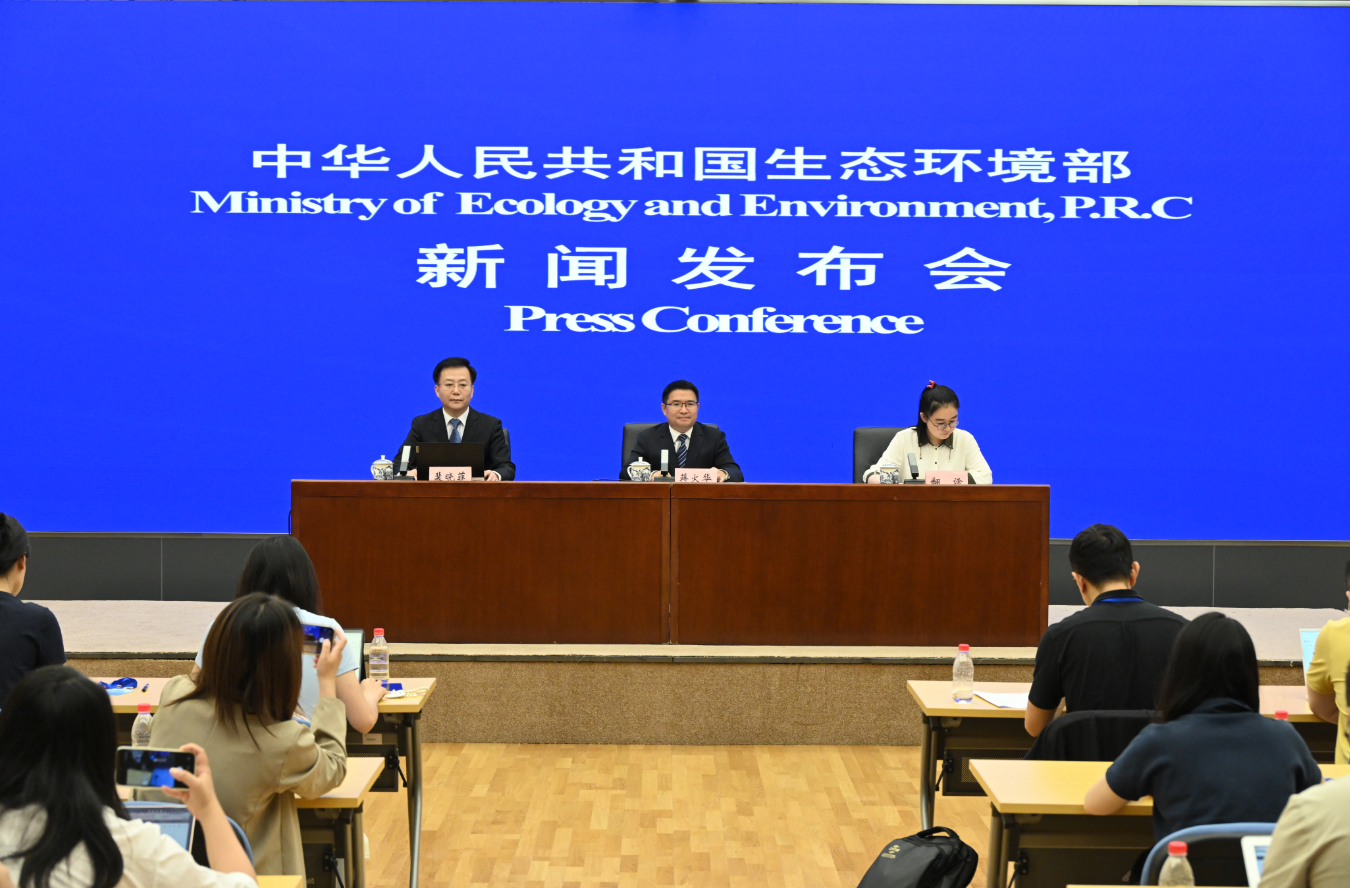
By 2030, building a Beautiful China is to become a conscious action of all citizens, with green and low-carbon lifestyles prevailing. This goal appears in the 'Beautiful China Construction National Action Promotion Plan (2026-2030)' jointly issued recently by six departments including the Ministry of Ecology and Environment. The plan sets five tasks for the 15th Five-Year Plan period: deepening the research and promotion of Xi Jinping's Thought on Ecological Civilization, promoting the inheritance and development of ecological culture, strengthening ecological and environmental publicity and education, guiding the green transformation of lifestyles, and fostering broad participation from all sectors of society, with 15 specific measures detailed.
To guide green lifestyle transformation, the plan proposes focusing on citizens' food, clothing, housing, transportation, consumption, and travel, and exploring the establishment of multiple incentive mechanisms such as points redemption, commercial discounts, and public service exchange, to stimulate the internal motivation for green and low-carbon behavior. Measures to promote ecological culture include relying on museums, exhibition halls, and science and education centers to add functions like ecological culture display and experience, and integrating ecological culture into tourism development to create ecological and cultural tourism boutique routes and specialty products. In terms of public participation, it requires deepening the opening of environmental protection facilities to the public, encouraging eligible industry enterprises to open as broadly as possible, and integrating volunteer service matrix resources to cultivate well-managed, high-quality volunteer teams, and creating brand projects like 'Beautiful China, Volunteer with Me.' The Ministry of Ecology and Environment stated that the next step is to coordinate resources with relevant departments, strengthen collaboration, and continue to promote deep and solid public action, building a social foundation for the comprehensive advancement of Beautiful China.
On the same day, the Ministry of Ecology and Environment's regular press briefing also announced other matters. Two reports were released at this year's 'National Low-Carbon Day' event. Among them, the 'Progress Report on the Construction of Product Carbon Footprint Management System (2026)' summarized the work progress of various departments and local practices since 2025. The report shows that China's carbon footprint accounting standards system is becoming increasingly complete, prioritizing standards for key products that are large in volume, wide in scope, and export-oriented. By the end of 2025, 15 national standards, including for electrolytic aluminum and electronic appliances, and over 200 group standards in sectors like steel and chemicals had been issued. The construction of the national product carbon footprint factor database is also accelerating. The second version of the National Greenhouse Gas Emission Factor Database has been launched, with the total number of factors increased to 576, incorporating carbon emission intensity data for key products such as crude steel. At the same time, the pilot program for national product carbon footprint labeling certification is progressing orderly, and key industries are exploring the establishment of carbon footprint grading management and information disclosure systems, with application scenarios like green procurement, green finance, and low-carbon supply chain construction continuously expanding. International exchanges and cooperation on carbon footprint mutual recognition are being strengthened, with China actively participating in international rule-making.
The other report, 'China's Progress Report on Adaptation to Climate Change (2025),' noted that in 2025, the global average near-surface temperature was about 1.43°C higher than pre-industrial levels, regional high-temperature heatwaves occurred frequently in China, and precipitation extremes were prominent, significantly impacting natural ecosystems and economic and social systems. Despite this, various regions and departments effectively prevented and responded, achieving substantial results in advancing key climate adaptation work. China has now basically formed a policy system and institutional mechanisms for climate adaptation, with significantly improved capabilities in monitoring and early warning, risk assessment, and disaster prevention and control. Actions in key areas and regions are steadily being promoted, and a favorable situation of society-wide conscious participation has initially taken shape. China is also actively participating in and leading global climate governance, deepening multilateral development bank climate financing cooperation, and helping developing countries enhance their climate response capacity through South-South cooperation capacity-building workshops.
The Ministry of Ecology and Environment also issued the 'Notice on Optimizing the Format of Pollutant Discharge Permits (Duplicate).' The new version of the pollutant discharge permit comprehensively covers environmental elements such as air, water, industrial solid waste, industrial noise, and soil, with management requirements for each element in separate chapters. It also adopts a 'one outlet, one table, one code' format, meaning each discharge outlet corresponds to a table and a unique QR code. Starting from August 15, the update will be launched by industry in batches, with full application by the end of 2026. Existing enterprises do not need to refill information and can directly log into the national platform to download the new version; first-time applicants can directly apply for the new version.
Additionally, the '2025 Huangyan Island Blue Hole Survey Report' was released today. Blue holes are rare geological landform units, known as 'the eye of the ocean,' with significant ecological and scientific value. The report shows that the Huangyan Island Blue Hole belongs to a globally rare type of coral reef growth structure origin marine blue hole, and is the first coral reef blue hole detected in China. Its entrance area is about 1491.7 square meters, with a maximum diameter of 56.3 meters and a depth of 16.6 meters. The internal structure is funnel-shaped with a narrow bottom, and there is turbidity stratification in the water. Preliminary geochronological research indicates that the blue hole formed at least 3200 years ago. The blue hole and surrounding waters have rich biodiversity, with typical coral reef organisms such as corals, giant clams, fish, sponges, and sea anemones distributed inside. The nationally protected first-class wild animal green sea turtle was found inhabiting the area. Over two consecutive years of surveys in the surrounding waters, a total of 165 species of reef-building corals and 184 species of fish were recorded, and environmental DNA technology recorded over 2700 species of marine organisms. The Chinese government has established the Huangyan Island National Nature Reserve, and the survey results demonstrate the positive effectiveness of ecological protection in the Huangyan Island sea area. In the next step, the Ministry of Ecology and Environment will focus on the formation and evolution mechanism of the Huangyan Island Blue Hole, ecological evolution laws, ecosystem functions, and its contribution to the high biodiversity of the natural ecosystem, carrying out more in-depth, systematic, and comprehensive surveys and research to provide scientific support for further strengthening the protection of the South China Sea ecosystem and biodiversity.